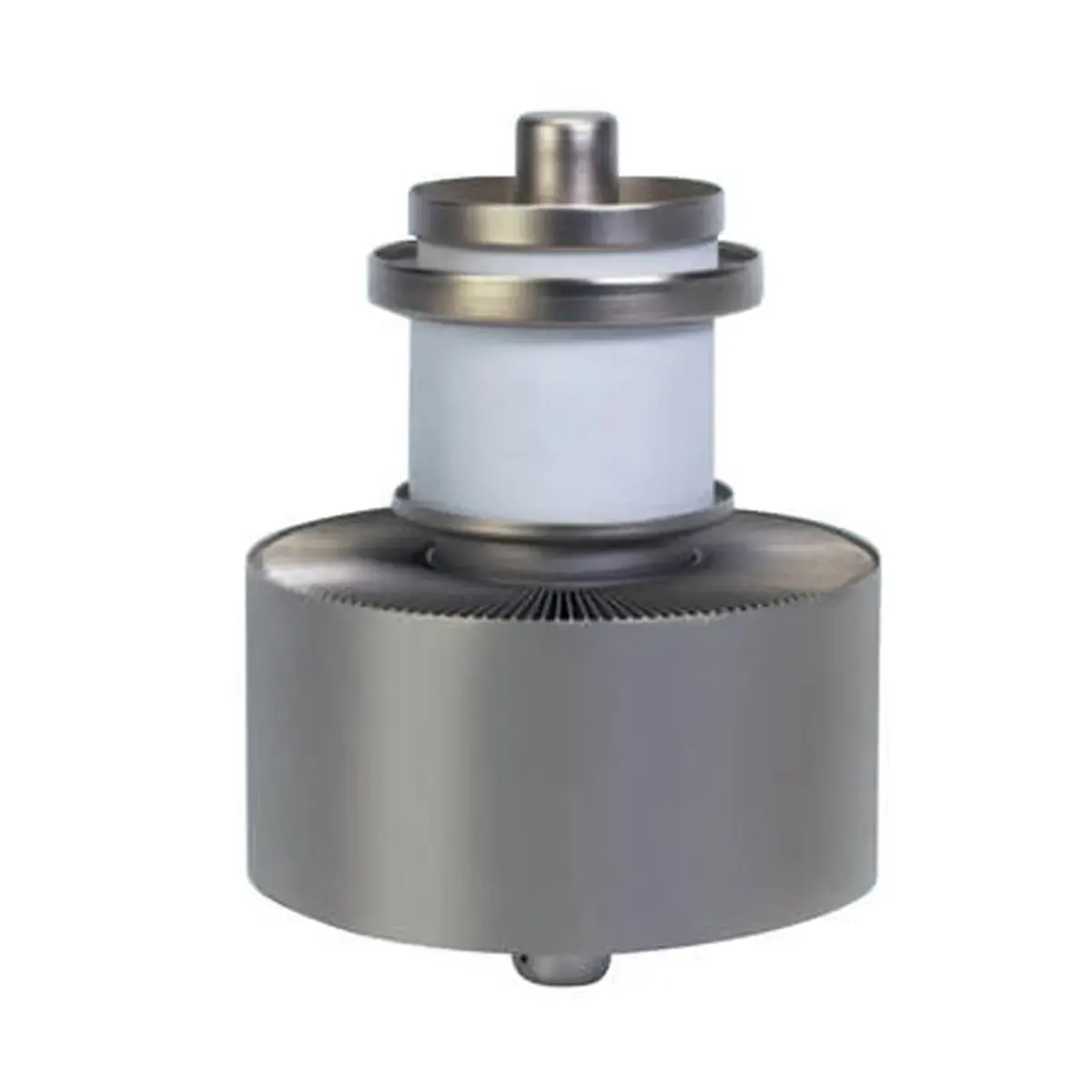
Description
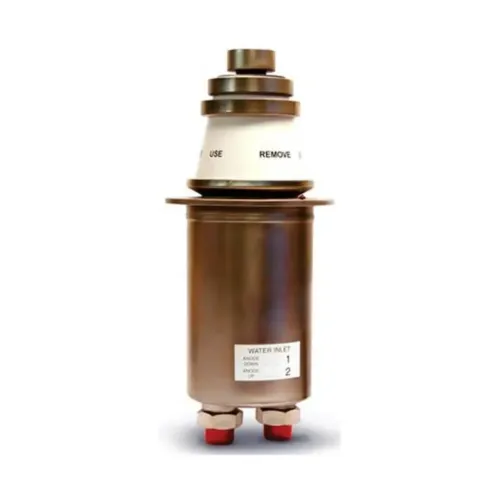
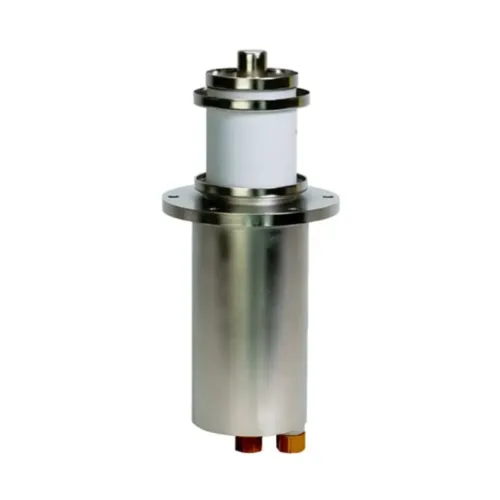
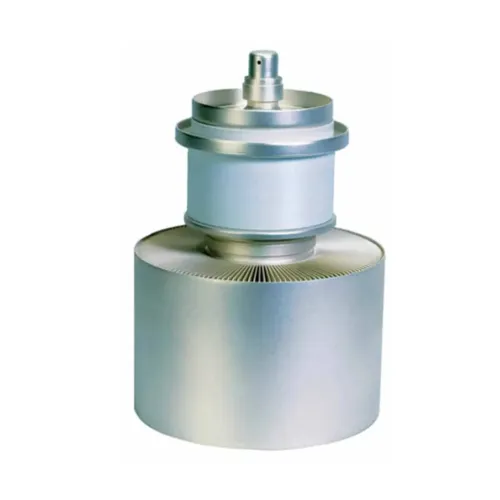
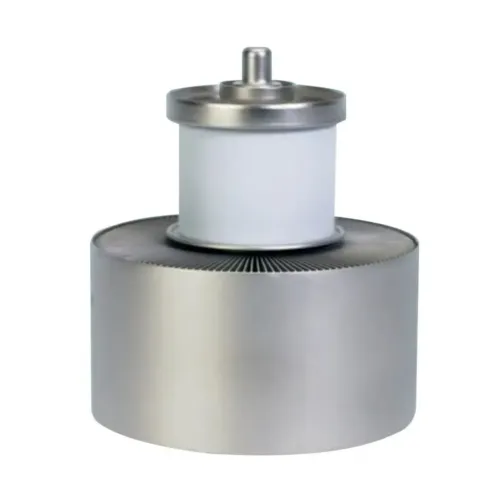
The RS3020CL is a RF power triode designed for dielectric heating applications. This tube uses a coaxial design and metal-ceramic technology. This triode may be operated in CW or pulse modes. For operation in pulse mode, the parameters depend on each equipment characteristics. Contact us for specific information. The RS3020CL is a forced-air cooled triode.
Electrical characteristics of RS3020CL
Cathode Filament thoriated tungsten
Filament voltage 5.7 V
Filament current 135 A
Surge current (maximum) 405 A
Capacitances:
Grid to Anode 21 pF
Grid to Cathode 52 pF
Cathode to Anode (1) 1 pF
Amplification factor 22 Approx.
Transconductance (Va: 3 kV, Ia: 2 A) 36 mA/V approx.
Note (1) Measured with a 30 cm diameter shielding plate in the grid terminal plane.
Mechanical characteristics of RS3020CL
Operating position vertical, anode up or down
Weight 5.6 kg (9 lbs) approx.
Dimensions see outline drawing
Maximum ratings of RS3020CL
Frequency 120 MHz
Anode voltage:
Up to 40 MHz 12 kV
From 40 to 80 MHz 11 kV
From 80 to 120 MHz 9 kV
Control grid voltage -1.3 kV
Control grid current (F < 40 MHz)
At full load, CW 0.9 A
At no load, CW 1.1 A
Peak cathode current, CW 25 A
Anode dissipation 10 kW
Grid dissipation:
Up to 40 MHz 300 W
From 40 to 80 MHz 230 W
From 80 to 120 MHz 180 W
Grid resistance (at blocked tube) 15 KΩ
Cooling of RS3020CL
Anode cooling forced air
Cooling water flow and pressure gradient see cooling curves
Inlet air temperature 25 °C typ.
Temperature at any point on tube envelope 220 °C max.
Typical Operation of RS3020CL (Class C RF oscillator for industrial applications)
| Frequency | <40 | <80 MHz |
| Anode voltage | 10 | 8 kV |
| Control grid bias | -900 | -750 V |
| RF control grid voltage | 1180 | 1025 V |
| Anode current | 2.5 | 2.4 A |
| Control Grid current | 620 | 650 mA |
| Anode input power | 25 | 19 kW |
| Anode output power | 20 | 15 kW |
| Anode dissipation | 4.3 | 3.3 kW |
| Control Grid dissipation | 150 | 155 W |
| Grid resistance | 1.45 | 1.15 kΩ |
| Feedback ratio | 13.1 | 14.2 % |
| Oscillator efficiency | 80 | 78 % |